
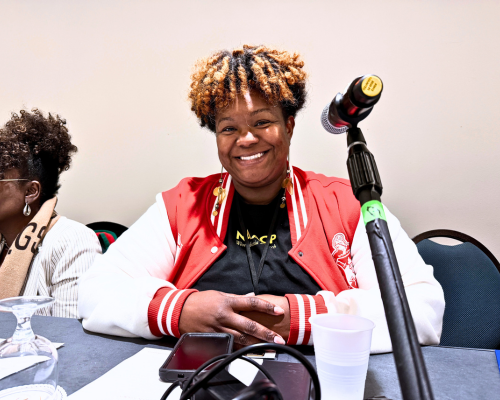
This summary reflects my direct observations and experiences as Health Committee Chair during the NAACP Florida State Conference Quarterly Meeting held January 23-23, 2026. As is typical for me, I focused more on conversations and connections than on taking photos, so this account is based on my personalnotes and interactions.
Day 1 – Environmental and Climate Justice Training
I attended the Environmental and Climate Justice segment, where branches were divided into groups to discuss environmental concerns within our respective communities. Our group began conversations around water quality and local environmental issues. The overall emphasis of the session centered on ensuring that each branch develops an Environmental and Climate Justice focus within its committee structure. There was also discussion about the intersection of environmental justice with other committees, particularly the health committee. President Shine clarified several misconceptions about municipal water sources and contamination. It was explained that medications and other toxins enter the water supply through various channels, and once these substances are introduced, they cannot always be removed through standard treatment processes. I look forward to exploring how environmental concerns can be more intentionally integrated into our health committee efforts.
The conversation briefly shifted to immigration and the historical dynamics between Black and Hispanic communities. Questions were raised regarding the NAACP’s position on ICE and related issues. I shared information about an immigration attorney based in Jacksonville, Maria Aguila, Esq., who is available to provide community trainings.
Following this session, we had an off-record branch conversation focused on building morale and cohesiveness. One idea discussed was hosting a branch cookout in March to strengthen relationships and engagement. We also discussed focus areas for education, particularly in relation to discrimination, educational disparities, and concerning patterns affecting students and families.
Communications Training
The Communications Training session focused on securing meaningful media coverage for community events and initiatives. A key takeaway was that journalists are not simply looking for another event. They are interested in the people involved, why they matter, and what makes the story newsworthy.
I also received a printout titled “The Black Press: Its Importance and Legacy,” which highlighted the historical context, contributions, and ongoing value of Black media outlets.
Networking Meet and Greet Mixer
I attended the networking mixer with members of the West Volusia Branch. The event included food and line dancing, providing a relaxed environment for connection and fellowship with other members.
Day 2
I began the day later than planned due to attending my daughter’s track meet. I joined the conference during the Health Training segment and was able to participate in the afternoon sessions.
Health Panel Discussion
I was invited to join the health panel by Aisha Oni Alayande, Health Chair for both the NAACP Highlands County Branch and the NAACP Florida State Conference. She asked me to speak on public health campaigns and share information about my BIPOC Mental Health Fair initiatives and related community mental health work.
The session began late due to technology issues, but the panel adjusted and continued with the discussion. Topics included a heart disease pilot program seeking approximately $47,000 in funding, prostate cancer treatment and lived experiences, maternal and infant mortality, broader public health concerns, and mental health access.
After the session, I distributed business cards and received invitations to provide mental health education in other communities. Aisha also shared plans for a future event to continue this work.
Civic Engagement and Education Session
The Civic Engagement and Education panel emphasized the importance of continued advocacy, even in challenging climates. Speakers encouraged participants to remain active in both community and political spaces, utilize available resources, strengthen unity, and support one another in advocacy efforts.
Closing Reflection
This conference marked my first quarterly meeting experience with the NAACP at the state level. The sessions on environmental justice, communications, and public health were especially relevant to my current work in community mental health and outreach.
Overall, the meeting provided opportunities to gain new knowledge, build connections across branches, share local initiatives, and explore future collaborations.
_____
Janae T. Ponder, MSW, LCSW, currently serves as the Health Committee Chair for the West Volusia NAACP.
Recent Comments